


EU supports Georgia in testing a coordinated response to biological threats at Sadakhlo border crossing
28/2508 Oct 2026
Kyiv, Ukraine — 8 October 2026
Georgian frontline and specialist agencies tested their coordinated response to a simulated biological threat during a field training exercise held on 5–6 October 2026 under the European Union CBRN Centres of Excellence Project 100 (P100). The activity marked the culmination of several months of joint preparation by Georgian authorities and the P100 team.
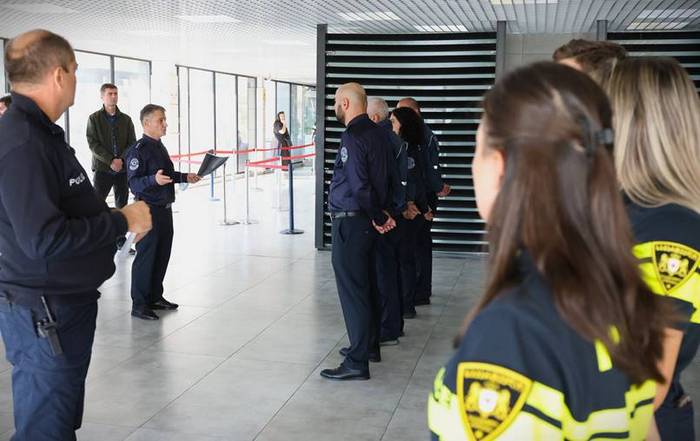
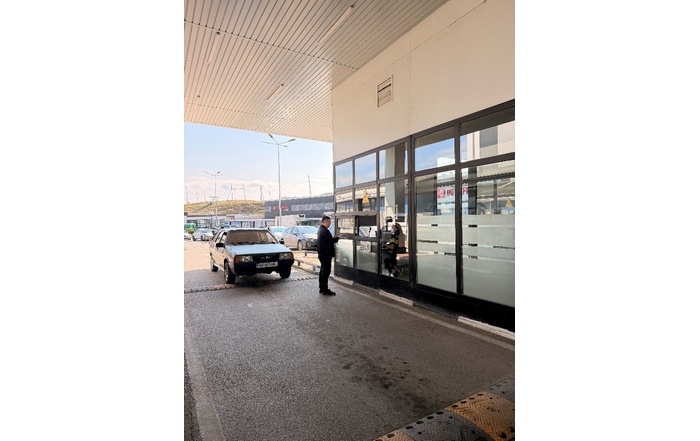
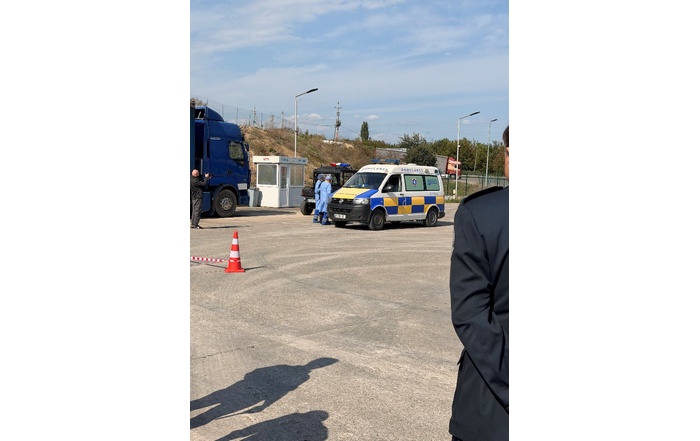
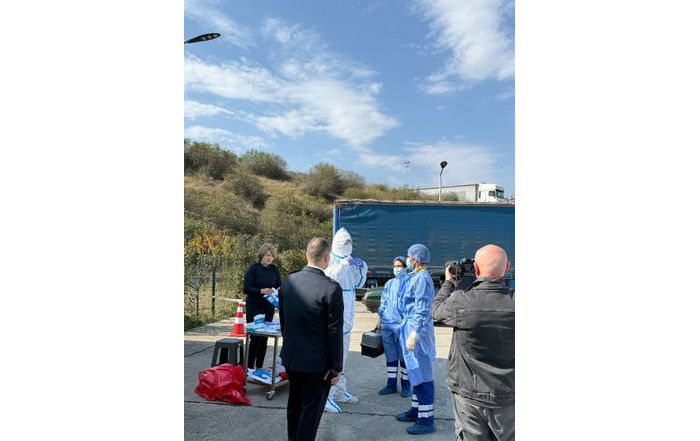
The Georgia segment of the Georgia–Armenia Cross-Border Field Training Exercise (FTX) began with a preparatory drill in Tbilisi on 5 October. The live exercise took place at Sadakhlo Border Crossing Point on the Georgia–Armenia border on 6 October, followed immediately by a hot washup discussion to capture participants’ observations and recommendations.
Funded by the European Union and implemented by the Science and Technology Center in Ukraine (STCU), P100 supports stronger frontline biosafety and biosecurity measures in South East and Eastern Europe. Its training, standard operating procedures and field exercises help institutions detect potential biological threats and coordinate an effective response.
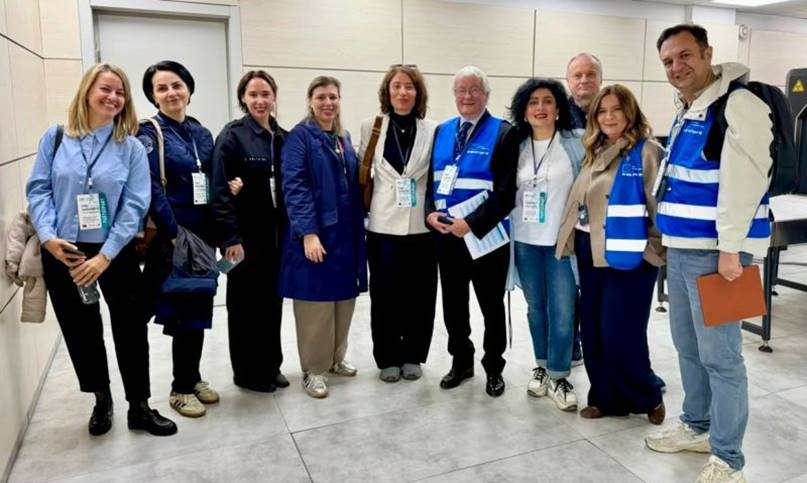
The exercise brought together Patrol Police, the Revenue Service’s Customs Department and its sanitary, phytosanitary and veterinary control personnel, the National Center for Disease Control and Public Health, the National Food Agency, the State Laboratory of Agriculture, emergency medical services and the Marneuli Municipality Public Health Center.
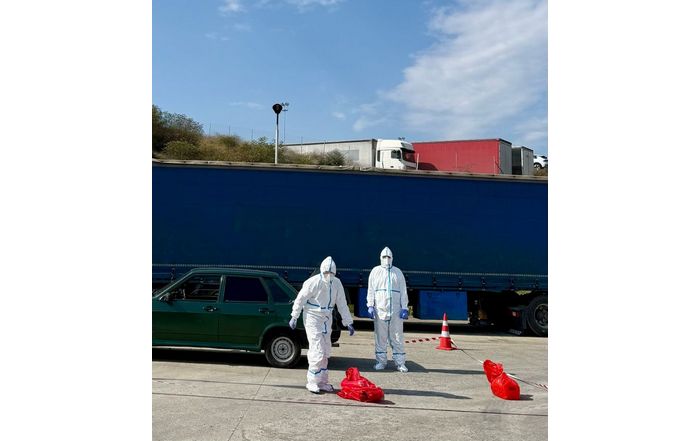
The Sadakhlo scenario involved a traveller displaying symptoms compatible with anthrax and the discovery of undeclared raw meat suspected of contamination. This simulated event brought human health, animal health and food safety concerns into a shared operational response, applying a One Health approach at the border. All incident details and laboratory findings formed part of the simulation.
Working in an operating border environment, frontline officers practised recognition and notification of a suspected biological incident, protective measures and coordination with specialist services. The exercise framework covered incident command, management of potentially exposed travellers and suspect animal products, laboratory referral and decontamination. Follow-on tabletop elements were designed to address simulated laboratory findings, cross-border notification and coordinated public communication.
The preparation included regular multi-agency planning discussions, joint scenario development since January 2026, and a technical visit to Sadakhlo on 29 July. Georgian specialists worked with P100 experts to align the scenario with national procedures and the crossing point’s operational conditions. Georgia’s EU CBRN CoE National Focal Point supported the engagement and coordination of the participating institutions.
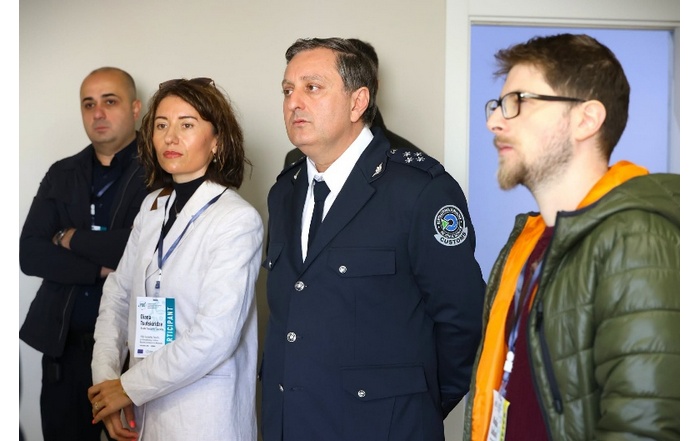
Senior officials from the Revenue Service, including Deputy Heads of the Customs Department and the Head of the Sanitary, Phytosanitary and Veterinary Control Division, together with departmental leadership from the State Security Service and Patrol Police, attended as observers. They highlighted the value of seeing inter-agency cooperation in a realistic setting and identifying areas requiring further leadership attention. Representatives of the U.S. Defense Threat Reduction Agency also observed the exercise.
During the hot washup, participants and P100 experts highlighted effective frontline detection, notification and cooperation between services. Discussions also identified priorities for further joint training, local risk assessment, feedback to frontline staff, and clarification of specimen transport and decontamination procedures. Participants called for smaller, targeted refresher exercises at all BCPs in Georgia to sustain the skills developed.
These findings will inform the forthcoming lessons learned discussion and further work with Georgian partners on procedures and training under P100. The Sadakhlo activity forms part of the project’s wider field exercise series, helping partner countries turn preparedness plans into tested institutional practice.
P100 will continue supporting Georgia and other partner countries of the South East and Eastern Europe region in strengthening frontline biosafety and biosecurity capacities through tailored training programs, institutional capacity building, SOP development, and regional and cross-border exercises.
STCU, together with the EU, extends its appreciation to all participants, presenters, and organizers who contributed to the success of these events. Their engagement and expertise were vital in achieving the shared mission of a safer, more secure region. This initiative underscores the EU’s and STCU's dedication to strengthening BS&S measures in the SEEE region and fostering international collaboration to mitigate biological threats effectively.
 PRESS RELEASE
 PRESS RELEASE
 PRESS RELEASE
 PRESS RELEASE
 PRESS RELEASE
 PRESS RELEASE
 PRESS RELEASE