


STCU P100 Strengthens Frontline Biosafety and Biosecurity Measures in Southeast and Eastern European Region: SOPs implementation workshop in Moldova
21/2517 Feb 2026 - 20 Feb 2026
February 27, 2026 – Kiev, Ukraine
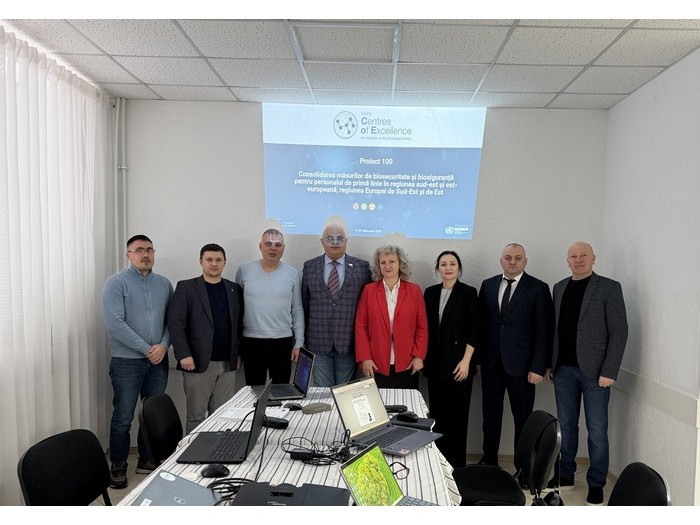
In a dedicated effort to strengthen frontline biosafety and biosecurity (BS&S) capacities across the South-East and Eastern Europe region, the STCU P100 Team conducted a national SOPs implementation workshop in Cahul, Republic of Moldova, from 17 to 20 February 2026, under the European Union CBRN Centres of Excellence Initiative’s Project 100 (P100): Strengthening Front Line Biosafety and Biosecurity Measures in the SEEE Region. The workshop aimed to engage designated national stakeholders, review existing operational arrangements, and identify practical pathways to support the implementation and operationalisation of relevant EU-aligned and international standards and guidance for reinforcing BS&S measures—particularly at border crossing points and customs-controlled areas.
From 17 to 20 February 2026, the Republic of Moldova hosted in Cahul the first P100-delivered SOPs implementation workshop in the South-East and Eastern European (SEEE) region, serving as the initial structured platform under Project 100 to launch the national SOPs implementation process. The workshop convened designated experts from the General Inspectorate of the Border Police (IGPF), Customs Service, National Agency for Public Health (ANSP), National Agency for Food Safety (ANSA), and the National Centre for Prehospital Emergency Medical Assistance (CNAMUP). Facilitated under P100 by the project’s Frontline Expert, the workshop focused on strengthening interinstitutional coordination and operational readiness for biological threats within the CBRN context.
18 February 2026 – Workshop launch and national implementation methodology
The workshop opened with a structured technical discussion on the P100 implementation methodology, anchored in the P100 Guideline on Frontline Biosafety and Biosecurity Measures and the standardized P100 SOPs package. Participants reviewed national mandates and operational interfaces to ensure that implementation is consistent with the legal competences of each authority and feasible for frontline operations at PoE/BCPs. The discussions highlighted the strategic importance of establishing a single, interoperable operational approach across institutions, ensuring timely detection and escalation of biological risks while maintaining the continuity of border traffic and core border-management functions. Key implementation challenges addressed included clarifying decision-gates and handover points between first-line and support authorities, aligning notification timelines and minimum data requirements, and ensuring that proposed measures can be executed with available staffing and infrastructure in routine and surge conditions. A shared understanding of these parameters provided a strong technical basis for subsequent drafting work.
19 February 2026 – Drafting and consolidation of national implementation instruments
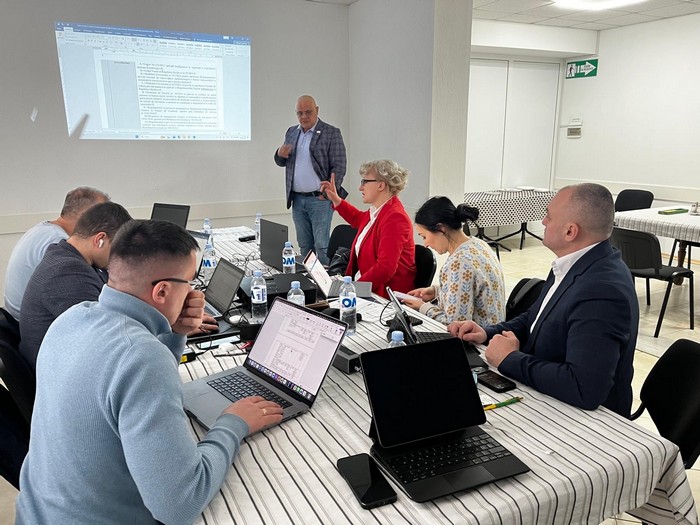
Working sessions were dedicated to translating the P100 package into Moldova-specific instruments to support uniform interinstitutional practice. The workshop consolidated draft national documents designed to regulate the operational cycle at the border — including preparedness, monitoring, detection, notification, early warning, risk assessment, and coordinated response — and to formalize structured handover between first-line and support authorities. A key success of the day was the collaborative consolidation of text that reflects both legal mandates and operational realities, enabling implementation through a clear national architecture (interinstitutional instrument + umbrella SOP + internal institutional procedures). The drafting process also addressed practical constraints—such as the need for clear procedures for temporary isolation/retention, secure information exchange, and coordinated escalation without creating overlaps of authority—while ensuring that roles remain verifiable, auditable, and compatible with existing national mechanisms.
20 February 2026 – Operational validation and implementation roadmap
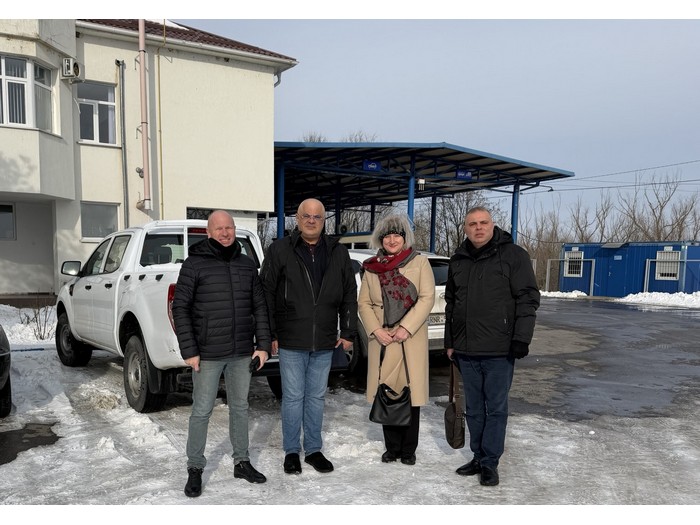
A targeted field validation visit to PTFS Cahul supported the practical verification of key operational elements, including information flow, controlled separation of passengers when required, emergency medical access routes, and interagency coordination modalities. This step was essential to confirm feasibility under real operational conditions and to translate draft provisions into implementable arrangements (including space allocation, access routes, and coordination modalities). The workshop concluded with agreement on follow-up actions and a phased pathway for endorsement, internal integration, dissemination, training, and validation through exercises, supporting completion of the national implementation process by the end of May 2026. A notable outcome was the shared commitment of the participating authorities to proceed with structured internalisation and capacity-building, ensuring that implementation is sustainable and embedded into routine practice.
Overall significance and outcomes
The Cahul workshop represents an important step in strengthening the Republic of Moldova’s capacity to prevent and manage the cross-border transmission of biological hazards through legally grounded, operationally coherent, and interinstitutionally coordinated procedures at PoE/BCPs. Despite the inherent complexity of aligning multi-agency mandates, operational workflows, and legal requirements, the workshop delivered concrete national draft instruments and an agreed implementation pathway, demonstrating effective cooperation and strong institutional ownership.
EU, together with the STCU reaffirms their commitment to supporting partner countries across the region in implementing sustainable frontline biosafety and biosecurity measures.
 PRESS RELEASE
 PRESS RELEASE
 PRESS RELEASE